Fit to Digital / Fit to AI diagnostics
A structured read on where your operation stands today and where digital and AI can create practical value. Decision-grade output the leadership team can act on.
2-4 weeks
Innovia Systems
Fit for Digital. Fit for AI.
Innovia Systems is a specialist consultancy for organizations that run complex operational and customer workflows. We help you understand where you stand today, where digital and AI can create practical value, and how to move from strategy to implementation.
The gap
Organizations that run complex operational and customer workflows reach a point where strategy decks pile up but little of it reaches production. Generic technology advice does not close that gap. We focus on the real work: operational workflows, data readiness, decisioning, core processes, customer journeys, automation, and the business models behind them. And we stay until the change is running, not just designed.
What we do
We operate as a specialist consultancy with technology delivery built in. The four engagement types stack: most clients start with a diagnostic and move through redesign into prototyping and implementation support.
A structured read on where your operation stands today and where digital and AI can create practical value. Decision-grade output the leadership team can act on.
2-4 weeks
Target operating model and redesigned core processes for the workflows you run: org, process, data, technology. Sequenced to what the business can actually absorb.
4-8 weeks
Working prototypes for new business models and workflows, configured to your data and processes. Ready for live testing within weeks.
6-12 weeks
From prototype to production: co-design with your internal teams and vendors, integration, change management, hypercare. We stay until the change runs the business, not the other way around.
3-9 months
Where we focus
We focus on pragmatic transformation across the workflows that actually run your business. Six areas where we do the work, from the first diagnostic to running change.
A structured read on where you stand and where digital and AI create practical value, grounded in your real operations.
From strategy to a sequenced plan you can execute, mapped to the workflows and constraints you actually have.
Redesigned core processes and a target operating model the business can absorb: org, process, data, technology, governance.
Rapid working prototypes that make a new business model testable, not theoretical, configured to your data and processes.
We build alongside your internal teams and vendors, and stay through implementation until the change is running in production.
Data readiness, decisioning, and automation that ships, with explainability and governance from day one, not bolted on later.
Fit for AI
Most AI advice stops at the slide. We find where AI earns its place in how you work, then build the integrations, agents, and controls that make it real. We know the terrain because we run our own operation on it.
Connectors into the systems your teams already work in, so an assistant acts on your real context and data, not a generic chatbot.
Multi-agent workflows that pick up a task, complete it, check each other, and hand off, the same pattern we run internally to ship and review software.
Access boundaries, audit trails, and data controls built in from the start, so adoption stays safe and defensible.
Every use case tied to time saved or quality gained, so you scale what works and drop what does not.
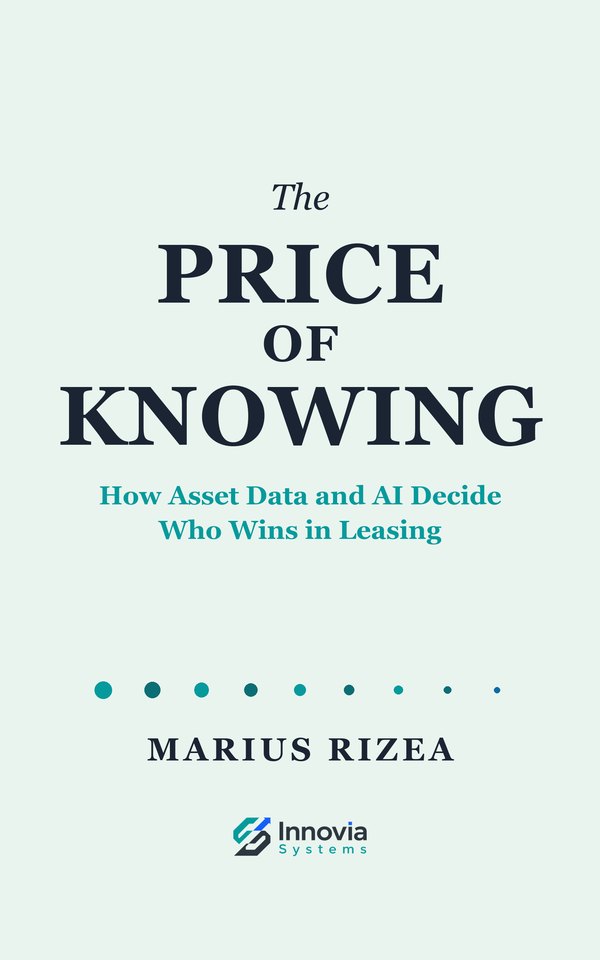
Writing
How Asset Data and AI Decide Who Wins in Leasing
A book by our founder, Marius Catalin Rizea, drawn from nearly two decades of experience in European leasing. It asks a question that reaches past any single industry: what an organization actually knows about the assets it finances, who is allowed to read that record, and whether the answer arrives in time to change a decision.
The first is the rate, and it is worked hard already. The second is what the lender actually knows about the asset, which has been slow to arrive and expensive to establish.
The maker, the workshop, the insurer, the customer and the funder each hold a different piece of the same financed asset. On every deal, each of them pays again to establish something another already knew.
A record gains value as it connects. Each party that joins removes a duplicate verification for the others, and the asset stops being examined at two moments and starts being observable in between.
The advantage goes less to whoever holds the best data, or trains the best model, than to whoever acts on it fastest. The book shows where a 269 basis point margin becomes 129, and why the identical deal returns thirteen per cent on one balance sheet and five on another.
From February 2027 a battery must carry a passport any authorised party can read, on open standards, through an open exchange network. The law uses the phrase "without vendor lock-in". Interconnection is being written into the market as a condition, rather than sold into it as a product.
That gap is the work we do. We map where a decision is actually made, find what the organization already knows but cannot reach in time, and rebuild the path so the answer arrives while the decision is still open. Sometimes the answer is a process change and no software at all. When it is software, we prototype it and put it in front of the people who will use it before anyone commits to a build.
Nine minutes, the full opening chapter, read by a synthetic voice.
Every figure in the book carries its source and its date, and it states in advance what would prove it wrong. That is the standard we hold our own recommendations to.
How the engagement is structured
Beyond a single engagement, the Innovation Partnership is a longer co-creation relationship that takes the strategy into execution. You work directly with the person doing the work, embedded with your own team, with decision rights over the roadmap and the operator depth of someone who has run complex operational and customer workflows firsthand.
Shaped to your data, processes, and business model from day one, not a template applied from the outside.
You co-own the roadmap. What we tackle first, second, and third reflects your priorities.
Real operator experience running complex operational and customer workflows. Engagements start from operator-grade context, not a blank page.
At the end of the first year you have change running in your operation, not a stack of slides and a vendor selection memo.